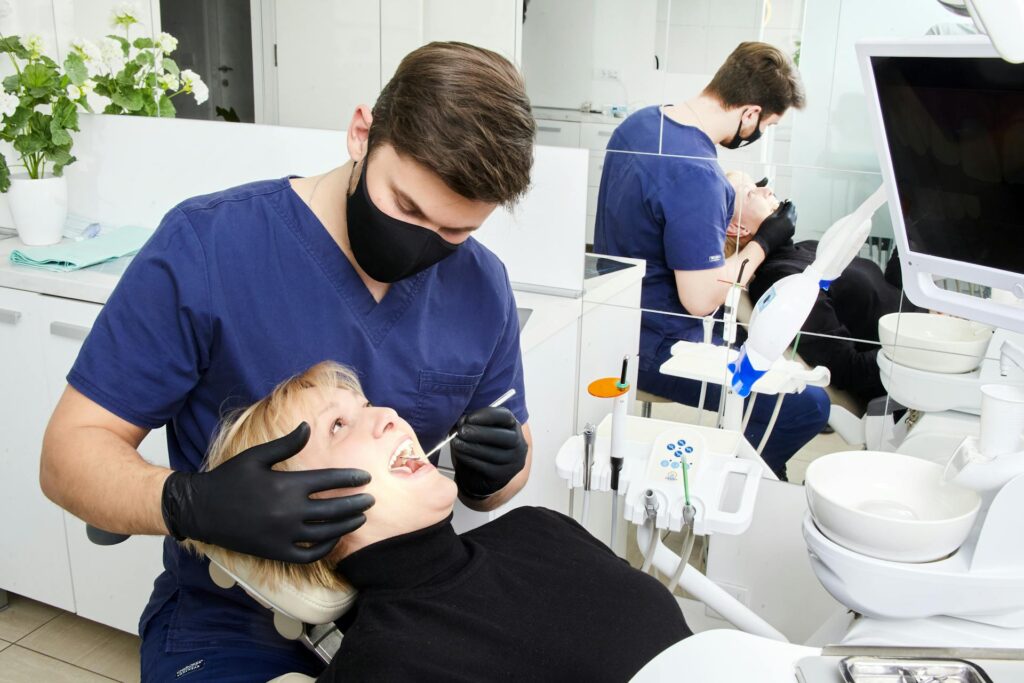
Orthodontics treats many problems related to teeth and jaws, and the results and effects of orthodontics on the appearance of the smile, the alignment of the teeth, etc., make orthodontics a valuable experience for every individual. The arrangement of the upper jaw teeth has always been of great importance to patients, and many people are looking for the best way to treat their teeth with orthodontics due to the undesirable appearance of orthodontic wires, brackets, etc., so in this article, we will fully explain the orthodontic conditions of the upper jaw.
Types of Dental Orthodontics
If you want to use dental braces to treat your teeth or plan to treat your teeth with brackets and you do not have information about the orthodontic conditions of the upper jaw; In this article, we will explain and review the types of dental braces so that you can safely choose one of them for yourself and your children.
Traditional Metal Braces
The most common type of braces is traditional metal orthodontics. Traditional braces are made entirely of metal, which is why, among all braces, metal braces are the least expensive and often the fastest and most effective treatment method.
Ceramic Braces
This type of orthodontics is called ceramic because the braces that are attached to the teeth are made of light-colored ceramic materials to look similar to the color of the teeth. The wires used in ceramic braces are usually metal or made of a special light color.
The distinctive color of ceramic braces makes them one of the types of braces that are not easily visible on the teeth, which is why they are popular with many patients. But this comes at a cost, as ceramic braces are expensive and must be carefully cleaned to prevent their color from changing. It is worth noting that ceramic braces help teeth move into their correct position more quickly.
Lingual or invisible orthodontics
One type of orthodontics that some may prefer to use due to work or social issues is invisible or lingual orthodontics, which are called lingual braces or invisible braces because they are completely hidden behind the teeth. This type of brace is attached to the inside of the teeth and cannot be seen.
But this type of braces, as well as having great advantages, also has disadvantages that you should know before deciding to choose it, because it is difficult to completely clean invisible orthodontics and is also more expensive than other dental braces and is not suitable for all patients, but if you have lingual orthodontic conditions, it may take longer to achieve the desired results.
Clear orthodontics
This type of orthodontics includes a complete transparent mold that is specially designed for the patient’s teeth and is replaced every two weeks. Almost the entire time of orthodontic treatment, you will need about 18 to 30 different molds that are replaced every few weeks as the distance between the teeth changes due to the movement of the teeth from their previous position.
Although this type of orthodontics is almost transparent and is not noticed by others, it can be expensive for some and is also not suitable for all cases and may take a very long time to achieve the desired results.
Importance of Orthodontics
After learning about the types of braces that a person can use, we should now pay attention to the importance and benefits of using different types of braces, namely the purposes of using them.
Orthodontics is a special type of dental treatment tool that dentists use for many cosmetic and medical purposes. The most important goals that dentists use orthodontics to achieve are:
Orthodontics gradually moves teeth from their current position to their correct position and alignment.
Improving the occlusion of the jaws and the teeth of the upper and lower jaws on each other.
Expanding the jaws or restoring the position of protruding front teeth to the back.
Orthodontic Maintenance and Cleaning
After installing braces, it is best to follow the following steps and tips to protect the braces from any damage and to be able to achieve your desired results in a faster period:
Avoid eating foods that may stick to your gums and teeth, Such as hard candy, popcorn, and chewing gum.
Avoid sugary drinks and sodas because they can damage tooth enamel.
Do not neglect your dentist in Richmond Hill appointments, and always see your doctor on time.
Clean your teeth after each meal with a toothbrush, toothpaste, dental floss, or toothpicks designed specifically for orthodontics.
The final stage of the orthodontic treatment course
After removing the braces and getting the desired result, the last stage that should not be neglected in the case of upper jaw orthodontic conditions is the stabilization stage, and here a special tool called a tooth retainer is designed, which is placed on the teeth after the braces are finished. The tooth retainer is used to prevent the teeth from returning to their previous position and to keep them fixed.
Two types of tooth retainers are known:
Removable tooth retainers: They are usually in the form of metal wires or plastic molds that can be worn or removed at any time.
Fixed retainers: These types of retainers are usually attached to the back of the teeth with adhesive and are more effective than fixed retainers. Most adults will need to wear retainers for life to maintain the results, but there is no need to worry because over time, the person will get used to the retainer and will be able to wear it in their mouth without any pain or discomfort.